In 2026, global buyers are examining Canned Whole Tomatoes with sharper commercial discipline. They want stable supply, clear specifications, and evidence beyond attractive catalogs. The product may look simple, yet sourcing decisions involve tomato variety, growing region, pack size, acidity, processing date, and container performance. A bright red can does not guarantee consistent quality. It only starts the conversation.
Recent data from the Food and Agriculture Organization’s FAOSTAT database confirms tomatoes remain a major global food crop, supporting extensive processing networks. The World Processing Tomato Council also tracks production conditions, crop expectations, and regional supply pressure. These sources help buyers understand why weather, irrigation, energy costs, and harvest timing can affect wholesale offers. USDA Foreign Agricultural Service reports add valuable country-level insight, especially for production, trade, and market conditions. Still, buyers should verify every figure. Forecasts can change quickly.
Trade data requires similar care. UN Comtrade commonly groups preserved tomatoes under HS 2002.10, covering whole or prepared tomatoes. It does not always isolate the exact commercial grade buyers need. That limitation matters. Supplier comparisons should therefore combine trade statistics with factory audits, laboratory results, production records, and shipment histories. A reliable supplier can explain drained weight, Brix, calcium chloride use, can lining, pallet patterns, and shelf-life testing without hesitation. Small details matter. This 2026 supplier guide evaluates manufacturers through those practical signals, while recognizing an uncomfortable reality: no single report can prove consistency. Experience still has to meet evidence.
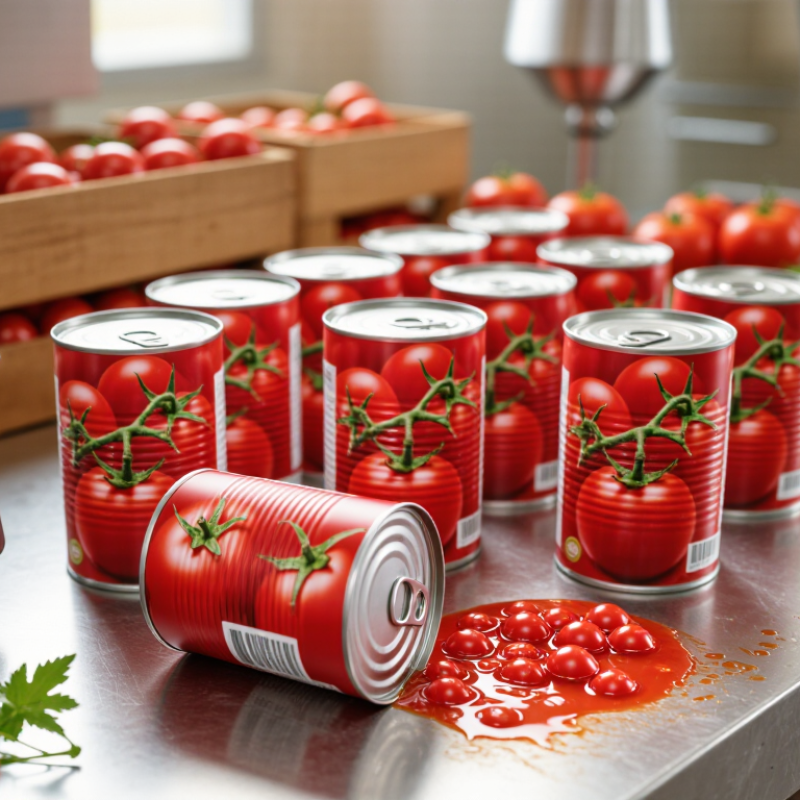
Canned whole tomatoes are ripe tomatoes preserved in their natural shape, usually with juice, salt, or acidity regulators. They differ from diced tomatoes because the fruit remains mostly intact inside the can. Buyers often choose them for sauces, soups, stews, and foodservice recipes requiring controlled texture.
Production begins with sorting freshly harvested tomatoes by color, firmness, and visible damage. Workers or optical systems remove unsuitable fruit. The tomatoes are washed carefully, peeled with steam or hot water, and placed into clean cans. Tomato juice or puree is added around the whole fruit. Some processors use calcium salts to help maintain firmness, although excessive treatment may create an unnatural bite.
The sealed cans undergo thermal processing at controlled temperatures and times. This step reduces harmful microorganisms and supports shelf stability without refrigeration. Reliable suppliers monitor can seams, internal pressure, acidity, fill weight, and retort records. Laboratory checks may also measure pH, drained weight, color, and foreign material.
Small details matter. A broken tomato can release more solids and change sauce consistency. A dull red color may indicate overripe fruit or excessive heating. Packaging damage also deserves attention. It can compromise protection even when the product looks acceptable. Buyers should review specifications, batch traceability, storage conditions, and sample performance before placing large orders. Some judgments remain difficult, especially when natural tomato variation affects size and firmness.
How to Evaluate Top Suppliers for Global Buyers in 2026
The World Processing Tomato Council estimated more than 40 million tonnes of processing tomatoes in 2024. This scale creates choice, but not always consistency. Global buyers should request three recent production lots, not one attractive sample. Check whole-tomato size, color, firmness, juice ratio, and drained weight. Measure pH and soluble solids independently. A supplier’s specification sheet is useful, but laboratory verification matters more.
Codex Standard CXS 13-1981 provides a practical benchmark for canned tomatoes. Review ingredient declarations, defect limits, net contents, and container integrity against the standard. Ask for seam inspection records, sterilization data, and lot-level traceability. Packaging deserves close attention. Inspect cans for dents, rust, swollen ends, and damaged pallets after a simulated sea shipment. UN Comtrade data under HS 200210 can also reveal major trade flows and sourcing patterns.
Price comparisons should include freight, port charges, insurance, inspection, and expected waste. Request production capacity by month, minimum order quantity, lead time, and contingency plans. A low quotation may hide weak documentation or inconsistent fruit quality. That is easy to miss. I would not approve a supplier from certificates alone; documents can be current while operations change. A video audit helps, but an independent factory inspection offers stronger evidence. The final decision should balance verified quality, reliable delivery, transparent records, and realistic corrective actions.
| Evaluation Dimension | Recommended 2026 Benchmark | Buyer Verification Method | Suggested Weight | Scoring Guide |
|---|---|---|---|---|
| Product Identity | Whole or whole-peeled tomatoes with consistent cultivar, pack style, and ingredient declaration; no undisclosed additives. | Review product specification, ingredient statement, photographs, and approved production sample. | 8% | 0–5 points |
| Tomato Soluble Solids | Typically about 5.0–8.0 °Brix for whole canned tomatoes, subject to the agreed product specification. | Check an accredited laboratory report and test retained samples using a calibrated refractometer. | 8% | 0–5 points |
| Safety and Acidity Control | Finished product pH controlled below 4.6, with a validated thermal process and documented commercial-sterility controls. | Request process authority documentation, pH records, heat-process records, and corrective-action procedures. | 15% | 0–5 points |
| Sensory and Physical Quality | Intact or substantially intact fruit, uniform red color, natural tomato aroma, firm texture, and low incidence of peel, core, or blemish defects. | Conduct a blind sample evaluation and compare defect tolerances against the agreed quality specification. | 12% | 0–5 points |
| Ingredient and Allergen Management | Clear declaration of tomatoes, juice or purée, salt, calcium chloride, citric acid, or other permitted ingredients when used; allergen controls documented. | Check the regulatory label, allergen statement, formulation approval, and change-control procedure. | 7% | 0–5 points |
| Food-Safety Certification | Valid certification under a GFSI-recognized scheme or an equivalent independently audited food-safety system. | Verify certificate scope, site address, validity period, audit grade, and major nonconformities. | 12% | 0–5 points |
| Traceability and Recall Readiness | Lot-level traceability from raw-material source through processing, packaging, storage, and shipment; mock recall completed within 24 hours is preferred. | Review a traceability exercise, lot-code format, recall plan, and mass-balance records. | 10% | 0–5 points |
| Packaging and Container Integrity | Suitable cans or aseptic containers with reliable seam or seal integrity, corrosion control, accurate coding, and export-compliant case packing. | Request seam reports, container specifications, migration declarations where applicable, and transit-test results. | 8% | 0–5 points |
| Format and Private-Label Capability | Common formats such as 400 g, 800 g, institutional cans, or foodservice packs, plus compliant multilingual labeling and artwork approval. | Confirm minimum order quantities, packaging options, label regulations, tooling needs, and approval timelines. | 6% | 0–5 points |
| Supply Continuity and Seasonality | Documented harvest calendar, approved backup sources, inventory policy, capacity plan, and transparent allocation process during shortages. | Review production capacity, historical service levels, business-continuity plan, and lead-time performance. | 7% | 0–5 points |
| Export Logistics | Reliable container loading, export documentation, pallet configuration, shelf-life declaration, and delivery performance appropriate to the destination market. | Check Incoterms, estimated lead time, port options, document samples, shipment history, and damage-claim process. | 5% | 0–5 points |
| Commercial Competitiveness | Competitive total landed cost after freight, duties, packaging, testing, payment terms, and expected quality-related losses. | Compare like-for-like quotations and calculate total landed cost using the same specification and delivery terms. | 2% | 0–5 points |
| Total Evaluation Score | Use a weighted score after sample approval and document verification. | Recommended minimum: 80/100, with no critical food-safety failure. | 100% | Maximum: 5.0 weighted average |
2026 Top Canned Whole Tomatoes Suppliers for Global Buyers
Leading Canned Whole Tomato Suppliers by Region and Market
Regional sourcing matters because whole tomatoes vary in firmness, acidity, packing liquid, and harvest timing. The World Processing Tomato Council estimated global processing output above 45 million metric tonnes in 2024. That scale supports broad supply, but quality remains uneven. Mediterranean suppliers often serve Europe, the Middle East, and foodservice buyers. Their products typically offer firm texture, bright color, and convenient port access. Southern European canneries also provide private-label formats, including 400-gram and 2.5-kilogram cans.
North American suppliers focus on retail consistency and institutional volumes. USDA Foreign Agricultural Service reports continue to identify the United States and Mexico as important processed-tomato producers. Buyers serving restaurants may prefer larger cans, stronger seam controls, and stable pallet specifications. Mexico can offer competitive transit times into North American markets. However, seasonal weather can change raw-tomato costs quickly.
Asia and emerging Mediterranean markets add useful capacity. China, Türkiye, and India supply price-sensitive buyers, while Morocco and Tunisia support regional and European demand. UN Comtrade trade data shows that processed tomato commerce is highly concentrated among a limited group of exporting countries. That concentration creates efficiency, but also risk. A delayed vessel can affect thousands of cans. Buyers should inspect drained weight, Brix, calcium chloride use, can lining, and laboratory certificates before signing annual contracts. I would not judge suppliers by price alone. Factory audits and retained samples often reveal details that brochures miss.
The chart compares major tomato-sourcing regions by estimated processed-tomato production in 2024, measured in million metric tonnes. Processed-tomato production is used as a transparent supply-capacity proxy for canned whole tomato buyers; it does not represent company-level sales or brand market share.
Source: World Processing Tomato Council (WPTC), 2024 global processing tomato production estimates.
Global buyers should evaluate canned whole tomatoes through measurable product standards, not attractive catalog images.
Check tomato variety, maturity, color, firmness, drained weight, and the percentage of broken fruit.
A practical specification may include uniform pieces, clean tomato juice, and controlled acidity.
Many buyers request pH records, soluble solids, pesticide testing, and microbiological results for each production lot.
The can should open cleanly without excessive rust, dents, leakage, or swelling.
Small defects matter during retail inspection.
Certifications help, but they do not replace supplier audits.
Look for HACCP-based controls, ISO 22000, BRCGS, IFS, or equivalent systems accepted in the destination market.
Request valid certificates, audit dates, laboratory reports, and traceability samples.
Packaging choices include tinplate cans, easy-open lids, carton cases, and pallet wrapping suitable for long-distance transport.
Confirm can dimensions, net weight, drained weight, stacking limits, and language requirements before purchase.
Pricing depends on crop conditions, tomato grade, can size, order volume, packaging materials, season, and Incoterms.
Ask for both FOB and delivered quotations when freight changes quickly.
A low price may hide weaker specifications or incomplete testing.
That is worth questioning.
Even experienced buyers can miss label translations or pallet limits. Recheck every detail against the import rules and final sales channel.
Global canned whole tomato buying requires more than a competitive quotation. FAOSTAT reported global tomato production above 190 million tonnes in recent years, yet fresh supply does not guarantee suitable canning quality. Buyers should request processing records, harvest regions, and variety information. Check drained weight, tomato firmness, color, acidity, and defect limits. Small details matter.
Supplier verification should combine documents with physical evidence. Ask for recent third-party food safety audits, laboratory results, allergen controls, and traceability records. Confirm that one lot can be traced from farm intake to container loading. The FDA Food Safety Modernization Act and Codex food hygiene principles provide useful reference points, even when the destination differs. Do not trust certificates alone. I have seen documents look complete while batch codes remained unclear. That is a warning.
Use UN Comtrade HS 200210 data to compare export volumes, prices, and seasonal patterns across supplying countries. Large shipments may indicate capacity, but not consistency. Request three retained samples from separate production lots. Test net weight, drained weight, pH, and packaging integrity through an independent laboratory. Review can dimensions, pallet patterns, remaining shelf life, and container loading photos. A low price still attracts attention. It can also hide weak raw material control, unstable freight terms, or excessive breakage. Written specifications and a pre-shipment inspection reduce those risks.
Request three recent production lots, not one attractive sample. Check size, color, firmness, juice ratio, and drained weight. Measure acidity and soluble solids independently. One sample can mislead.
Request specifications, laboratory reports, traceability records, and production dates. Review ingredient declarations and container inspection records. Ask for sterilization data and corrective-action reports. Documents can become outdated.
Check for dents, rust, leaks, swollen ends, and damaged labels. Inspect carton strength and pallet wrapping. Simulate sea transport when possible. Small defects become expensive.
Confirm can dimensions, net weight, drained weight, lid type, and stacking limits. Check carton markings and destination-language requirements. Review lining suitability for acidic food. Pallet limits are easy to miss.
Request current certificates and recent audit dates. Check lot testing for acidity, soluble solids, pesticides, and microbiological results. Verify traceability from raw tomatoes to finished cans. A certificate is not enough.
Compare product price, freight, insurance, port charges, inspection, and expected waste. Request both factory-port and delivered quotations. Confirm minimum order quantity and payment conditions. Cheap offers may hide missing tests.
Ask for monthly production capacity, harvest timing, lead times, and backup plans. Review previous shipment performance and vessel delays. Check whether one facility handles the entire order. That concentration creates risk.
Yes, an independent inspection usually provides stronger evidence. Inspect processing lines, storage areas, laboratories, and pallet conditions. Retain samples from each approved lot. I would still leave room for doubt.
This guide explains what Canned Whole Tomatoes are, how ripe tomatoes are sorted, peeled, packed, and heat-processed, and why production controls affect flavor, texture, shelf life, and food safety. It also outlines how global buyers can evaluate suppliers in 2026 by reviewing processing capacity, quality consistency, export experience, communication, traceability, and supply reliability. Regional supplier comparisons are organized around market needs rather than brand names, helping buyers identify suitable sourcing options for foodservice, retail, and industrial applications.
The article further covers essential product standards, certifications, ingredient declarations, can dimensions, private-label packaging, pallet configurations, shelf life, and pricing factors such as tomato grade, pack size, order volume, freight, and seasonal availability. Finally, it provides a practical process for requesting samples, checking documentation, verifying facilities, confirming specifications, negotiating terms, and managing import procedures. With a structured verification checklist, buyers can reduce sourcing risks and select a dependable supplier that meets quality, packaging, compliance, and delivery requirements.
Abiding Food