Top Whole Peeled Tomatoes Suppliers for Global Buyers?

Time:2026-10-16 Author:Sophia
0%

Global buyers are paying closer attention to Whole Peeled Tomatoes as food costs, freight risks, and crop volatility reshape sourcing decisions. The World Processing Tomato Council’s 2024 industry forecast showed global processing volumes above 44 million metric tonnes. That scale matters. Even small quality differences can affect thousands of cans, pallets, and restaurant portions.

FAOSTAT production data also confirms tomatoes remain one of the world’s most widely cultivated vegetable crops. Yet production volume alone cannot identify the best supplier. Buyers should examine variety, harvest region, soluble solids, pH, firmness, drained weight, can lining, and traceability records. USDA commercial guidance and Codex standards provide useful reference points, but contract specifications still require careful review. A glossy can proves very little.

Food scientist Dr. Rui Hai Liu wrote, “Tomato products are the major source of lycopene in the American diet.” His observation highlights an important quality issue: processing can influence nutritional value, color, and texture. Whole peeled tomatoes should therefore be assessed beyond appearance. Strong suppliers can explain harvesting dates, sorting controls, sterilization methods, and laboratory testing. They should also show how they manage damaged fruit and changing weather patterns.

This market is not perfectly predictable. Supplier rankings can mislead when they ignore pack size, delivery reliability, or regional taste preferences. A low price may conceal higher breakage, weaker texture, or inconsistent batches. The practical question is simple: which supplier can deliver stable product quality, documented compliance, and dependable logistics across repeated orders? This guide compares leading options through that buyer-focused lens.
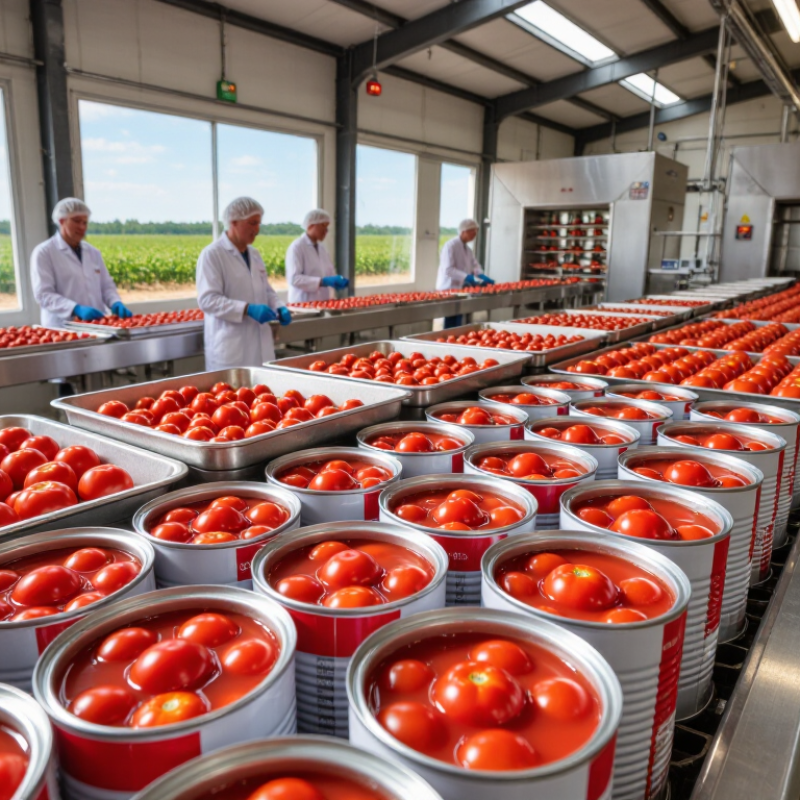
Top Whole Peeled Tomatoes Suppliers for Global Buyers?

What Makes a Reliable Whole Peeled Tomato Supplier?

A reliable whole peeled tomato supplier proves consistency before discussing price. In trial orders, inspect fruit size, natural color, firmness, and peel removal. The cans should hold intact tomatoes, not crushed pieces floating in thin juice. Request harvest dates, lot codes, origin records, and processing temperatures. Good suppliers answer with documents, not vague assurances. Ask for retain samples from the same lot. Small detail, big signal.

Professional buyers should review food-safety controls at each critical step.

Look for hygienic facilities, validated thermal processing, metal detection, and regular laboratory testing. Certificates matter, but current audit reports matter more. Check whether test results match the delivered lot. A dependable supplier also explains residue screening, allergen controls, and water quality without hesitation.

Packaging deserves equal attention: seam integrity, internal lacquer, pallet stability, and readable date coding prevent expensive surprises.

Communication reveals operational maturity.

Can the supplier confirm lead times, container loading plans, storage requirements, and corrective actions in writing? During one evaluation, a delayed reply exposed weak planning, even though the sample tasted excellent. That lesson stayed with me.

Taste is not enough.

Buyers should compare several shipments, not one attractive sample. No supplier is flawless; transparent mistakes are easier to manage than polished promises. Flexible specifications help, but undocumented changes should never pass unnoticed.

Key Regions Producing Whole Peeled Tomatoes

For global buyers, production geography often reveals more than a supplier brochure. Italy remains a major reference point, especially Campania and Puglia. Mediterranean sunlight supports dense, flavorful fruit there. Campania is known for smaller, aromatic tomatoes and established canning skills. Puglia offers broad agricultural capacity and efficient access to southern ports. Harvest timing matters.

Spain is another important source, with processing activity concentrated in Extremadura and other irrigated farming areas. These regions can provide consistent volumes, firm flesh, and practical formats for foodservice. California supplies large quantities of processed tomatoes through highly mechanized harvesting. Its output is often valued for predictable specifications and traceability systems. China and Turkey also support large-volume programs and flexible pricing. Not every low quote is efficient.

Experienced buyers compare regions against actual use, not reputation alone. They should review tomato variety, drained weight, salt level, acidity, can size, and packing dates. A trial shipment can expose soft fruit, excess juice, damaged seams, or uneven color. Ask for laboratory reports and verify certifications through current records. Port distance, crop risk, and currency changes affect the final cost. I have seen sourcing plans fail because one famous region was treated as automatically superior. A regional advantage still needs careful inspection.

How to Evaluate Suppliers for Global Purchasing

Selecting whole peeled tomato suppliers requires more than comparing container prices. FAOSTAT records global tomato production above 180 million metric tons in recent years, yet only a portion enters industrial processing. The World Processing Tomato Council estimated 2024 processing volume at roughly 45 million metric tons. This scale creates choice, but also uneven quality. Numbers can mislead.

Ask suppliers for harvest-year data, not general brochures. Review tomato variety, soluble solids, drained weight, peel percentage, and defect limits. A reliable supplier should provide batch-specific certificates, metal-detection records, sterilization details, and full lot traceability. Codex Standard CXS 13-1981 offers a useful reference for canned tomatoes. HACCP or ISO 22000 certification adds value, but verify the certificate scope and expiry date. A certificate alone proves little.

Global purchasing also depends on practical performance. Request samples from different production lots and test texture after heating. Whole tomatoes should hold their shape, release a clean tomato aroma, and avoid excessive liquid. Check can dimensions, pallet patterns, shelf life, and temperature controls during shipment. Review export records through UN Comtrade or another recognized trade database, where available. Ask how the supplier handles port delays and damaged cartons. It is an uncomfortable question, but necessary. A low quote may exclude inspection, inland delivery, or seasonal raw-material adjustments. My own evaluation would score communication separately; slow, vague answers often predict expensive surprises.

Logistics Performance of Major Whole Peeled Tomato Origin Markets

The chart uses the World Bank Logistics Performance Index 2023 overall scores on a 1–5 scale for selected origin markets commonly associated with processed tomato exports. A higher score indicates stronger customs, infrastructure, shipment reliability, logistics competence, tracking, and timeliness. Buyers should use this as an initial logistics-screening indicator and separately verify product specifications, certifications, capacity, pricing, and shipment records.

Source: World Bank, Logistics Performance Index 2023 — https://lpi.worldbank.org/

Packaging, Quality Standards, and Export Requirements

Top Whole Peeled Tomatoes Suppliers for Global Buyers?

Packaging, quality standards, and export documents often separate dependable suppliers from attractive quotations. Whole peeled tomatoes should arrive in food-grade cans, jars, or aseptic bags. Each container needs a secure seal, readable lot code, production date, and traceability details. Cartons should resist humidity and stacking pressure during long ocean transport. Pallets need stable loading and stretch wrapping. Small dents matter.

Quality begins before shipment. Experienced buyers request specifications for tomato variety, whole-piece percentage, net weight, drained weight, Brix, pH, color, and defect limits. The product should have a clean tomato aroma, firm pieces, and balanced juice. A supplier should provide laboratory results and retort records for each production lot. HACCP-based controls and recognized food-safety systems, such as ISO 22000 or equivalent certification, strengthen verification. Certifications alone are not proof. A factory audit can reveal weak seam checks, poor warehouse hygiene, or incomplete records.

Export readiness depends on the destination country. Common documents include a commercial invoice, packing list, bill of lading, certificate of origin, and product health or conformity documents when required. Labels may need nutrition data, net quantity, country of origin, batch identification, and storage instructions. Importers should confirm language, customs codes, shelf-life rules, and facility registration requirements before ordering. Samples can look excellent while a full container varies. That risk deserves attention. Request pre-shipment inspection, retain samples, and agree on claims procedures in writing. Mistakes still happen, especially with labeling and pallet counts. Reliable communication makes correction possible.

Comparing Prices, Logistics, and Supplier Support

For global buyers, the best whole peeled tomato supplier is not always the cheapest. A reliable comparison starts with pack size, tomato variety, drained weight, and annual contract volume. Prices should be checked against Incoterms, port charges, inspection fees, and currency changes. A low unit price can become expensive after demurrage or damaged cartons. Procurement reviews often reveal one problem: quotations may exclude important handling costs. Some estimates remain uncertain.

Tips: Request a recent price sheet and a landed-cost estimate. Ask for production dates, sterilization records, pallet dimensions, and container loading photos. Confirm whether the supplier can replace short shipments or packaging damaged during transit. Request samples from different batches, not only one convenient carton. It is less convenient, but more honest.

Supplier support matters after payment. Responsive teams should provide export documents, batch traceability, loading schedules, and prompt answers. For distant destinations, ask about lead times during harvest gaps and port congestion. Clear communication during your working hours may prevent costly delays. A trial order can expose weak cartons, uneven tomato texture, or slow document handling before a larger commitment. Still, no comparison is perfect; freight rates and crop conditions can change quickly. Share your forecast early, but keep delivery assumptions flexible.

Top Whole Peeled Tomatoes Suppliers for Global Buyers? - Comparing Prices, Logistics, and Supplier Support

Supplier Region Typical Product Format Indicative FOB Price Common Pack Sizes Minimum Order Quantity Estimated 20-Foot Container Load Typical Production Lead Time Transit Considerations Standard Product Documentation Supplier Support Level
Southern Italy Whole peeled tomatoes in tomato juice; commonly packed from ripe plum tomatoes US$0.68–1.05 per 400 g can 400 g, 800 g, 2.5 kg, 3 kg 1 mixed or full container; usually 1,800–2,400 cases depending on pack size Approximately 1,700–2,100 cases of 400 g cans 4–8 weeks during the main processing season Strong access to Mediterranean and European ports; ocean transit to North America commonly takes several weeks Commercial invoice, packing list, certificate of origin, health certificate, allergen statement, product specification, laboratory report High
Northern and Central Italy Whole peeled tomatoes, often offered in foodservice and private-label formats US$0.72–1.12 per 400 g can 400 g, 700 g, 800 g, 2.5 kg, 3 kg Usually 1–2 pallets for trial orders; full-container pricing from approximately 1,500 cases Approximately 1,700–2,100 cases of 400 g cans 5–10 weeks, depending on packaging availability and order customization Reliable European road and sea freight; suitable for buyers requiring frequent smaller shipments Product specification, nutritional panel, traceability statement, certificate of origin, food-safety certificates, export documents High
California, United States Whole peeled tomatoes packed in juice or purée; strong focus on domestic tomato varieties US$0.82–1.28 per 400 g equivalent 400 g, 800 g, 2.84 kg, institutional bulk formats Commonly 1 full pallet for standard items; container orders often begin around 1,000–1,500 cases Approximately 1,600–2,000 cases of 400 g equivalent packs 6–12 weeks outside peak inventory periods Efficient service to North American buyers; longer ocean transit to Asia, Europe, and the Middle East FDA-related export paperwork where applicable, commercial invoice, packing list, certificate of analysis, nutrition facts, product specification High
Spain Whole peeled tomatoes and tomato products packed for retail, foodservice, and industrial distribution US$0.63–0.98 per 400 g can 400 g, 800 g, 2.5 kg, 3 kg Approximately 1–2 pallets for stock items; customized labels may require larger quantities Approximately 1,700–2,100 cases of 400 g cans 4–8 weeks for regular products; 8–14 weeks for private-label packaging Competitive access to Mediterranean shipping routes and European distribution centers Certificate of origin, health certificate, product specification, nutrition declaration, traceability records, food-safety certification Medium–High
Portugal Whole peeled tomatoes in juice, generally supplied in retail and catering cans US$0.61–0.95 per 400 g can 400 g, 800 g, 2.5 kg, 3 kg Usually 1 pallet for standard stock; 1 container for negotiated export programs Approximately 1,700–2,100 cases of 400 g cans 5–9 weeks Good Atlantic and European port connectivity; freight costs can vary by destination and season Commercial invoice, packing list, certificate of origin, health documentation, ingredient declaration, laboratory analysis Medium–High
Greece Whole peeled tomatoes, often supplied in juice with options for foodservice packaging US$0.60–0.94 per 400 g can 400 g, 800 g, 2.5 kg, 3 kg Approximately 1–2 pallets for standard products; private-label orders generally require a full production run Approximately 1,700–2,100 cases of 400 g cans 5–10 weeks during the processing season Competitive routes into the Balkans, Middle East, North Africa, and European markets Product specification, certificate of origin, health certificate, nutrition declaration, traceability and batch records Medium
China Whole peeled tomatoes in cans, with broad options for contract packing and export labeling US$0.44–0.76 per 400 g can 400 g, 800 g, 2.5 kg, 3 kg Often 1 container for export orders; trial quantities may be available through trading channels Approximately 1,800–2,200 cases of 400 g cans 8–16 weeks, including production, inspection, and export scheduling Competitive pricing for long-haul shipments; ocean transit and port congestion should be included in planning Commercial invoice, packing list, certificate of origin, health certificate, certificate of analysis, product specification, inspection documents Medium
Turkey Whole peeled tomatoes and tomato-based canned products for retail and foodservice channels US$0.48–0.82 per 400 g can 400 g, 800 g, 2.5 kg, 3 kg Usually 1 container for direct export; smaller orders may be handled by distributors Approximately 1,700–2,100 cases of 400 g cans 6–12 weeks Convenient road and sea access to Europe, the Middle East, and North Africa Certificate of origin, health certificate, commercial invoice, packing list, product specification, laboratory report Medium
Indicative export ranges for standard canned whole peeled tomatoes. Actual prices vary according to tomato crop year, brix level, can specification, label requirements, certification, order volume, Incoterms, freight rates, and destination. Final quotations should be confirmed directly with the selected supplier.

FAQS

Which regions are important sources of whole peeled tomatoes?

Italy remains a major source, especially in Campania and Puglia. Campania often provides aromatic, smaller tomatoes. Puglia offers broad farming capacity and southern port access. Spain, California, China, and Turkey also support large-volume purchasing.

Why does harvest timing matter?

Harvest timing affects flavor, firmness, color, and processing consistency. Freshly processed tomatoes usually provide better texture. Ask for the harvest year and packing date. Old stock may contain softer fruit and excess liquid.

What product details should buyers compare?

Compare tomato variety, drained weight, salt level, acidity, Brix, and can size. Check whole-piece percentage and defect limits. Color should look even. The juice should not dominate the container.

How can buyers test supplier quality?

Request samples from several production lots. Heat the tomatoes before judging texture. Good pieces should hold their shape in a pan. Check aroma, color, liquid level, seams, and dents. One attractive sample proves very little.

Which documents should a supplier provide?

Request batch-specific laboratory reports and sterilization records. Ask for metal-detection results and complete lot traceability. Confirm certificate scope and expiry dates. A certificate alone proves little.

What packaging details deserve attention?

Containers may include food-grade cans, jars, or aseptic bags. Check seals, lot codes, production dates, and readable labels. Cartons should resist humidity and stacking pressure. Pallets need stable loading and secure wrapping. Small dents matter.

Which export documents may be required?

Common documents include an invoice, packing list, and bill of lading. A certificate of origin may also be required. Some destinations request health or conformity documents. Confirm customs codes, label language, shelf-life rules, and facility registration before ordering.

How should buyers evaluate the total purchase cost?

Do not compare container prices alone. Include inspection, inland delivery, port delays, currency changes, and seasonal adjustments. Review transport distance and crop risks. A low quote may hide important charges. Cheap is not always efficient.

What communication standards should buyers expect?

Reliable suppliers should answer technical questions clearly and quickly. Ask how they handle damaged cartons, delays, and product claims. Agree on inspection and compensation procedures in writing. Slow replies can predict expensive surprises. I would still verify everything.

Conclusion

Choosing the right Whole Peeled Tomatoes supplier is essential for global buyers seeking consistent quality, dependable delivery, and competitive value. A reliable supplier should demonstrate stable production capacity, strict quality control, transparent sourcing, and experience with international trade. Major producing regions may differ in tomato varieties, harvest seasons, processing methods, and export capabilities, so buyers should evaluate each supplier according to product specifications, certifications, production records, and customer support.

Packaging and export readiness are equally important. Buyers should confirm can sizes, packing materials, shelf life, labeling accuracy, food safety standards, and the supplier’s ability to meet destination-country requirements. Price comparisons should include more than the product quotation; shipping costs, minimum order quantities, payment terms, lead times, and logistics reliability also affect the total purchasing cost. Suppliers that provide responsive communication, flexible solutions, accurate documentation, and effective after-sales support can help global buyers reduce risks and build stable long-term cooperation.


Sophia

Sophia

Sophia is a dedicated marketing professional with an exceptional depth of knowledge about her company's products and services. With a keen understanding of market trends and customer needs, she crafts insightful blog posts that not only inform but also engage readers, enriching the company’s online......