An A10 Can of Tomatoes is a large foodservice container designed for restaurants, schools, caterers, and commercial kitchens. The term usually refers to a No. 10 can, not a standard household can. A typical A10 Canned Tomatoes container holds about 105 fluid ounces, or roughly 6 pounds 10 ounces, although the exact weight varies by brand and product style. That difference matters.
Inside, you may find whole peeled tomatoes, diced tomatoes, crushed tomatoes, or tomato purée. The label should identify the format, ingredients, drained weight, and best-before information. Some cans contain tomato juice, while others include heavy purée. Read the details carefully.
In a professional kitchen, one can may provide approximately 12 to 13 cups of tomatoes, depending on thickness and drained liquid. It can fill a stockpot quickly, making it practical for marinara, chili, soup, and large batches of salsa. The metal container feels heavy in one hand. Once opened, the unused tomatoes should be transferred to a clean, covered food-safe container and refrigerated promptly.
The name can be confusing. Some suppliers write “A10,” while others use “No. 10” or “#10.” They generally describe the same commercial size, but packaging standards and net contents can differ. Do not rely on the name alone.
This guide explains the size, common varieties, expected yield, storage practices, and buying considerations. It also questions a common assumption: bigger does not always mean better. An A10 Canned Tomatoes product may offer value, yet quality, acidity, texture, and recipe requirements still deserve careful attention.
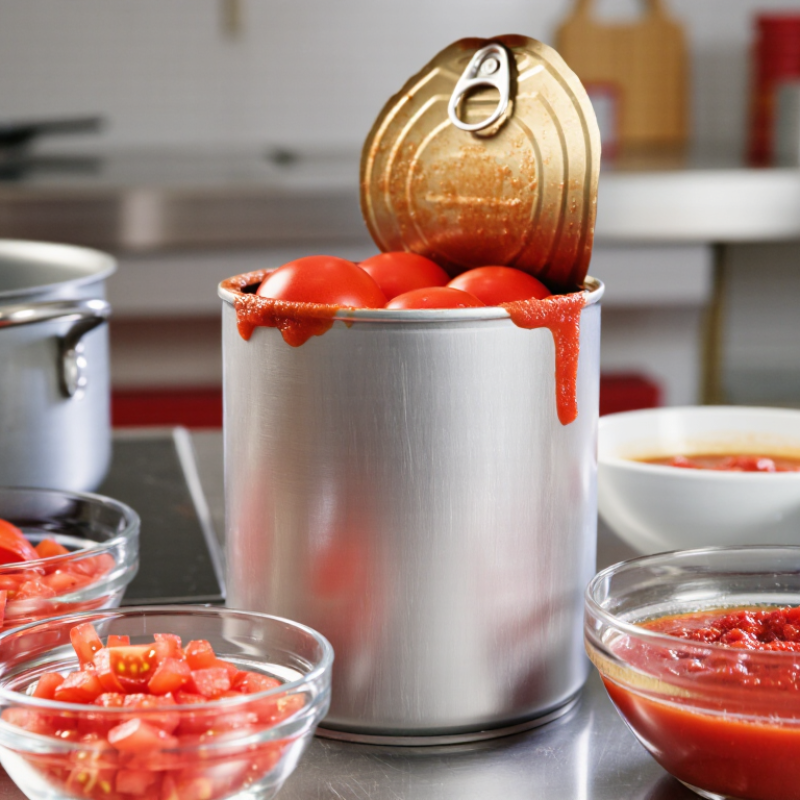
What Is an A10 Can of Tomatoes?
In commercial food packaging, “A10 can” describes a large institutional can size, not a tomato variety. It is commonly used by restaurants, caterers, schools, and food manufacturers. The can is typically close to 6¼ inches wide and 7 inches tall, although measurements can vary by supplier and production standard. Its contents often weigh around 6 to 7 pounds, but the exact net weight depends on tomato style, juice content, and processing.
The label may contain whole, diced, crushed, or puréed tomatoes. Check the net weight, drained weight, ingredients, and best-by information before ordering. A10 cans are built for high-volume kitchens, where one opened container can fill several sauce pans or a large soup kettle. After opening, transfer unused tomatoes to a clean, food-safe container and refrigerate them according to your facility’s food-handling procedures. Do not store them in the opened metal can.
I once assumed every A10 can held the same amount. That assumption was too neat. In practice, tomato density changes the usable yield, especially when seeds, skins, or extra liquid differ. A purchasing team should compare serving yield rather than can size alone. A recipe calling for two kilograms of crushed tomatoes may not use two cans efficiently. The label remains the most reliable reference.
An A10 can is a large food-service container. It usually holds about 6 pounds 6 ounces of tomatoes, or roughly 12 cups.
No. Net weight changes with the tomato style and packing liquid. Check the label before scaling a recipe.
One can may provide about 20 to 24 half-cup portions. Draining, trimming, and cooking can reduce the usable amount.
Packing liquid changes the recipe’s texture. Drain and measure one sample can before making a large batch.
Common styles include whole, diced, crushed, and puréed tomatoes. Whole tomatoes allow more control over the final texture.
They work well in sauces, soups, stews, chili, salsa, and large pasta dishes. Diced pieces remain visible in chunky recipes.
Transfer leftovers to a clean, covered food-safe container. Refrigerate promptly, label the opening date, and follow your kitchen’s safety window.
Yes, especially in soups and stews. Pizza sauce may need less liquid. I sometimes overestimate it, so check the texture early.
Diced tomatoes soften differently from crushed tomatoes. A small cut difference can change sauce thickness and cooking time.
Not always. It is heavy and awkward. Use a stable surface, a clean opener, and a clean spoon. Waste is easy to underestimate.
An A10 can is a large commercial food container designed for professional kitchens, institutional catering, and large-scale meal preparation. Its standardized size provides a generous quantity of tomatoes, making it more practical and economical than using many small cans. Depending on how the tomatoes are prepared—whole, diced, crushed, or puréed—one can can produce a substantial amount of sauce, soup, stew, or other tomato-based dishes.
A10 Canned Tomatoes are commonly used in restaurants, schools, hospitals, catering operations, and food production because they simplify storage and preparation. Before use, the can should be inspected for damage, stored in a cool and dry location, and rotated according to its production or best-by date. After opening, unused tomatoes should be transferred to a clean food-safe container, refrigerated promptly, and used within a suitable period. Proper handling helps preserve flavor, texture, and food quality while supporting efficient kitchen operations.

 Abiding Food