Whole Peeled Tomatoes in Tomato Juice are ripe tomatoes with their skins removed and their shape largely intact, packed in tomato juice. They are commonly sold in cans or jars. The juice usually comes from tomatoes, though the exact processing details can vary by product. Simple, really. Open a can, and you may see smooth, bright-red fruit surrounded by thinner liquid. The tomatoes can feel firm enough to lift with a spoon, yet soften quickly when simmered.
This format suits sauces, soups, stews, and braises because it offers both solid tomato pieces and flavorful liquid. You can crush the tomatoes by hand for a rustic sauce or leave them whole for a slower-cooked dish. Check the ingredient label for added salt or other ingredients, since brands differ. The juice is not necessarily identical in thickness or flavor from one can to another. That matters more than it sounds. A sauce may need less added liquid, or a little extra seasoning, depending on what you open.
This guide looks at how whole peeled tomatoes in juice are made, how they compare with diced or crushed tomatoes, and how to use them well. It also covers storage and practical substitutions. One small caution: “whole” describes their packed form, not a promise that every tomato stays perfectly intact. Some break during processing or transport. Nothing unusual, but worth knowing before a recipe depends on their shape.
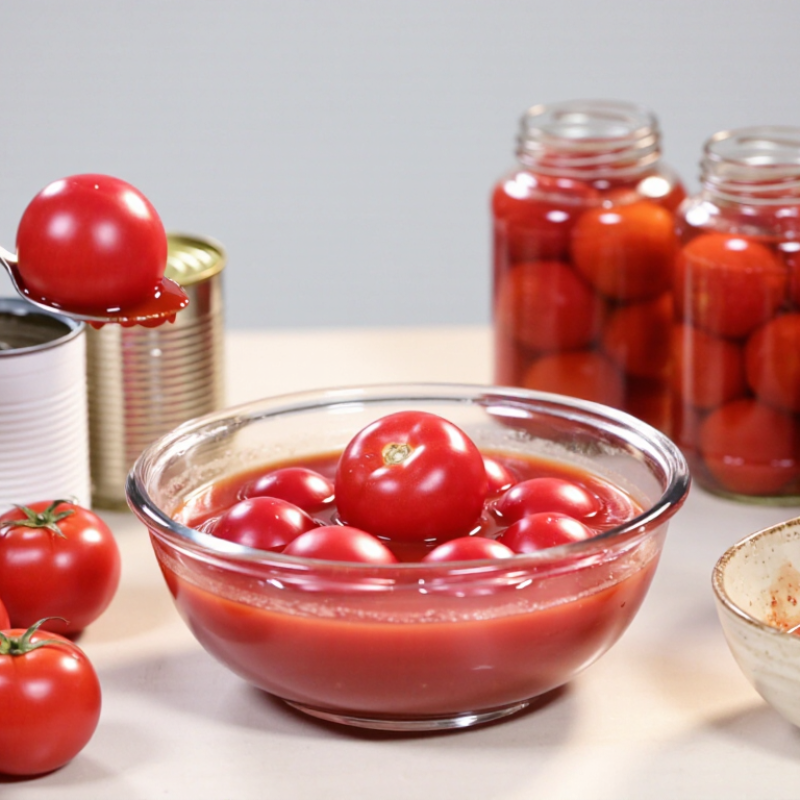
Whole peeled tomatoes in tomato juice are exactly what the name suggests: intact tomatoes with their skins removed, packed in liquid made from tomatoes. The fruit should remain mostly whole, though gentle handling or transport can leave a few split pieces. The juice is not necessarily a smooth sauce. It may look thin, with small seeds or bits of tomato pulp floating in it.
That liquid helps keep the tomatoes moist and adds tomato flavor to a dish. Tip a can into a pot, and the tomatoes may hold their shape at first; crush them with a spoon for a chunkier texture, or simmer longer for a softer sauce. Small differences matter. Some cans taste brighter or feel thicker than others, so check the ingredient list if you want to know whether salt or other ingredients have been added.
The phrase describes the packing style, not a guarantee that every tomato will be perfectly firm or identical. I sometimes expect neat, unbroken fruit and find one that has collapsed. That is normal. For soups, braises, and pasta sauces, the tomatoes and their juice can usually be used together, unless a recipe asks you to drain them.
Whole peeled tomatoes in tomato juice begin with firm, evenly ripened fruit. Incoming tomatoes are washed and sorted by size, color, maturity, and visible damage. Workers and optical equipment remove bruised, split, or moldy fruit before it reaches the peeling line. The scale is substantial: FAOSTAT’s 2022 crop data records about 186 million tonnes of tomatoes worldwide, including fruit grown for fresh markets as well as processing. Not all of that harvest becomes canned tomatoes. USDA Agricultural Marketing Service standards assess canned tomatoes for characteristics such as color, defects, and overall condition.
Blanching briefly exposes tomatoes to hot water or steam, loosening the skins without cooking the flesh through. A mechanical or water-assisted step then removes the skins, while operators check for torn fruit and leftover peel. It is not a perfect sorting system. Some soft tomatoes may still break, so line speed and fruit maturity matter.
Peeled tomatoes are placed in containers and covered with tomato juice, which helps fill spaces around the fruit. The sealed containers receive a controlled heat process, then cool before inspection and storage. Small details count: juice trapped between whole tomatoes can affect how the pack looks when opened. USDA grading guidance helps describe finished-product quality, but it does not make every can identical.
Whole peeled tomatoes are packed in tomato juice because the liquid does more than fill the can. It surrounds the fruit, helps reduce empty spaces, and carries tomato solids through every serving. During commercial heating, the liquid also helps transfer heat around the tomatoes. The result is a cohesive base for sauces, soups, and braises, rather than fruit sitting in plain water. Small detail, big difference.
USDA FoodData Central’s entry for canned tomatoes packed in tomato juice reports roughly 94 grams of water per 100 grams of product. That high moisture content helps explain why the packing liquid matters for texture and serving consistency. The Codex Alimentarius standard for canned tomatoes, CXS 13-1981, recognizes tomato juice as a packing medium. It is a defined processing choice, not merely leftover liquid. Still, juice does not guarantee a richer flavor in every can; tomato ripeness and processing also matter. I sometimes overlook how much the liquid shapes the final dish until I taste the tomatoes on their own.
Whole peeled tomatoes in tomato juice are peeled, intact tomatoes packed with tomato juice. Under FDA 21 CFR §155.190, their drained weight must be at least 50% of the container’s net contents. In practical terms, a can with 28 ounces net weight must contain at least 14 ounces of drained tomatoes. The remaining weight may include juice. That is the floor.
This threshold matters because liquid can make a can look fuller than its solid contents suggest. USDA’s National Agricultural Statistics Service reported roughly 12 million tons of U.S. processing tomatoes in its 2023 Vegetables Summary, showing the scale of the crop behind canned tomato products. That figure covers processing tomatoes broadly, not just whole peeled tomatoes. A kitchen-scale check can help: drain the contents in a sieve, let excess juice run off, then weigh the tomatoes. Results may vary with draining time, so this is a practical check, not a replacement for the FDA’s standardized method. The detail is easy to miss. A clear label and consistent draining matter.
How to read this chart: Under FDA regulation 21 CFR §155.190, tomatoes packed in tomato juice must have a drained weight of at least 50% of the contents’ net weight. For a hypothetical 100 g can, that means at least 50 g of drained tomatoes. The examples illustrate the threshold; they are not product test results.
Whole peeled tomatoes in tomato juice are intact tomatoes packed with a thin, pourable tomato liquid. Read the ingredient list, not just the front label. It may name tomatoes, juice, salt, or added seasonings. A short list is easy to understand, but salt levels can still vary. Check the nutrition panel if sodium matters to you.
Before opening, inspect the can. Avoid cans that bulge, leak, have deep dents near a seam, or show heavy rust. Do not taste questionable contents. Store sound, unopened cans in a cool, dry cupboard, away from a hot oven or damp sink. After opening, move unused tomatoes and juice into a clean, covered glass or food-safe plastic container. Refrigerate promptly and use within three to four days. I would not leave leftovers in the opened can; it is harder to cover well, and flavors may change.
For a quick sauce, crush the tomatoes by hand into a saucepan, then add some packing juice to control thickness. They also work in soups, braises, and baked dishes. Cook until steaming throughout, especially when adding them to a dish with other ingredients. The juice can taste mild or quite salty, so taste before seasoning. I sometimes add too much at the start. Fixing that later is not always easy.
Firm, ripe tomatoes are washed and sorted by size, color, maturity, and visible damage. They are briefly exposed to hot water or steam, then peeled and checked.
No. Soft fruit can break during processing, and small pieces of peel may remain. Line speed and ripeness matter.
It surrounds the tomatoes and fills spaces between them. The amount of juice can affect how the pack looks when opened.
Check the ingredient list for tomatoes, juice, salt, or seasonings. Salt levels can vary, so check the nutrition panel if sodium matters.
Avoid cans that bulge, leak, have deep dents near a seam, or show heavy rust. Do not taste questionable contents.
Keep sound cans in a cool, dry cupboard, away from a hot oven or damp sink. Simple, but easy to overlook.
Transfer leftovers to a clean, covered glass or food-safe plastic container. Refrigerate promptly and use within three to four days. I would not leave them in the opened can.
Crush them by hand into a saucepan and add packing juice to adjust the thickness. Taste before adding salt; I sometimes add too much early.
Whole Peeled Tomatoes in Tomato Juice are ripe tomatoes that have been sorted for quality, briefly blanched to loosen their skins, peeled, and packed whole in tomato juice. The juice surrounds the fruit, helps maintain moisture and flavor, and forms a simple packing medium without changing the tomatoes into a sauce. The finished product may include naturally occurring differences in color, firmness, and juice consistency.
When comparing cans, read the ingredient list, net weight, and any drained-weight information to understand what the package contains. Under FDA standard 21 CFR §155.190, the drained tomatoes must make up at least 50 percent of the product’s net weight. Store unopened cans in a cool, dry place, and refrigerate the tomatoes in a covered container after opening. Use clean utensils, follow any package directions, and discard the contents if the can is swollen, leaking, badly dented, or otherwise appears damaged. These tomatoes can be used in soups, stews, sauces, and other cooked dishes.

Abiding Food